
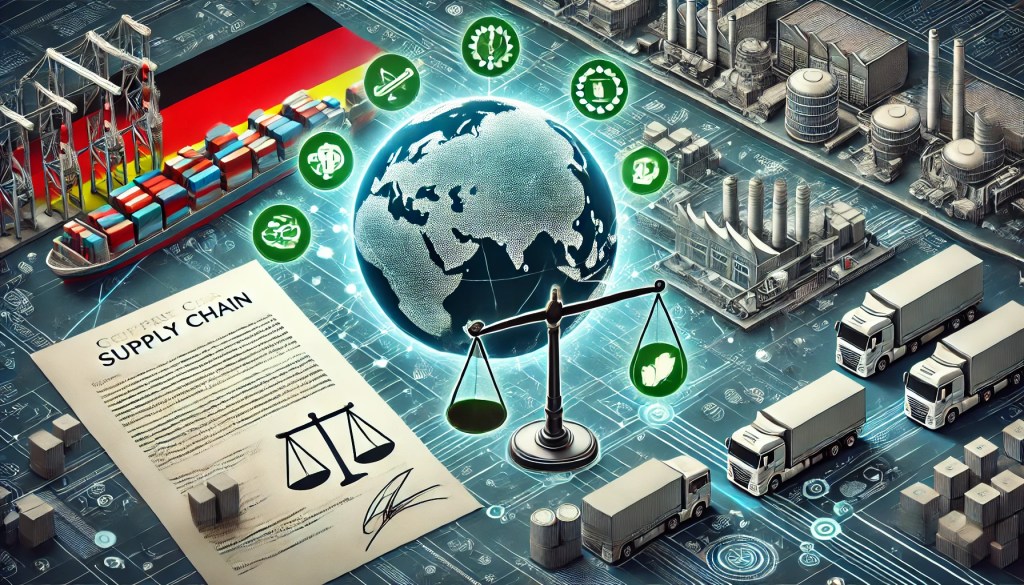
In an era of globalized trade and increasing scrutiny of corporate practices, supply chain transparency and accountability have become critical issues. The German Supply Chain Resilience Act (Lieferkettensorgfaltspflichtengesetz, or LkSG), which came into effect in January 2023, represents a significant step toward ensuring that companies take responsibility for human rights and environmental standards across their supply chains. While the law has been praised for its progressive approach, it has also faced criticism for its complexity, potential burdens on businesses, and limited enforcement mechanisms. This blog critically examines the LkSG, its implications for businesses, and its place in the broader landscape of global supply chain regulations.
Overview of the German Supply Chain Resilience Act
The LkSG requires German companies and foreign companies with a significant presence in Germany to conduct due diligence on their supply chains to prevent human rights violations and environmental harm. The law applies to companies with 3,000 or more employees (as of 2023) and will extend to companies with 1,000 or more employees starting in 2024.
Key Requirements of the LkSG:
- Risk Analysis: Companies must identify and assess risks related to human rights and environmental standards in their supply chains.
- Preventive Measures: Businesses are required to implement measures to prevent or mitigate identified risks.
- Remediation: Companies must establish mechanisms to address and remediate violations.
- Reporting: Annual public reporting on due diligence efforts is mandatory.
- Complaint Mechanisms: Companies must set up procedures for individuals to report violations.

Strengths of the LkSG
Focus on Human Rights and Environmental Protection
The LkSG is one of the first national laws to explicitly link supply chain accountability to human rights and environmental standards. It aligns with international frameworks such as the United Nations Guiding Principles on Business and Human Rights (UNGP) and the OECD Guidelines for Multinational Enterprises (OECD, 2011).
Encourages Corporate Responsibility
By requiring companies to conduct due diligence, the LkSG promotes a culture of accountability and transparency. It pushes businesses to go beyond profit motives and consider their social and environmental impact.
Global Influence
Similar to the EU’s proposed Corporate Sustainability Due Diligence Directive (CSDDD), the LkSG sets a precedent for other countries to adopt similar legislation, potentially harmonizing global supply chain standards (European Commission, 2022).
Criticisms and Challenges of the LkSG
Complexity and Compliance Costs
Small and medium-sized enterprises (SMEs) argue that the LkSG imposes significant administrative and financial burdens. Conducting due diligence across complex, multi-tiered supply chains can be resource-intensive, particularly for smaller companies (Bundesverband der Deutschen Industrie, 2022).
Limited Scope of Application
Critics argue that the LkSG’s focus on larger companies leaves smaller businesses, which often operate in high-risk sectors, exempt from its requirements. This creates a regulatory gap and undermines the law’s effectiveness (Germanwatch, 2023).
Weak Enforcement Mechanisms
While the LkSG allows for fines of up to 2% of annual turnover for non-compliance, enforcement relies heavily on self-reporting and lacks robust oversight. Critics argue that this creates a risk of „box-ticking“ compliance rather than meaningful change (Amnesty International, 2023).
Extraterritorial Challenges
The LkSG applies to companies’ direct suppliers and, to a limited extent, indirect suppliers. However, enforcing standards in countries with weak regulatory frameworks remains a significant challenge, raising questions about the law’s practical impact (Human Rights Watch, 2023).
Potential for Unintended Consequences
Some experts warn that the LkSG could lead to companies cutting ties with high-risk suppliers rather than working to improve conditions, potentially harming workers in developing countries (Institute for Human Rights and Business, 2023).

Comparison with Other Supply Chain Regulations
The LkSG is part of a growing trend of supply chain regulations worldwide. For example:
EU Corporate Sustainability Due Diligence Directive (CSDDD): The proposed EU directive builds on the LkSG but extends its scope to include climate change and stronger enforcement mechanisms (European Commission, 2022).
UK Modern Slavery Act: While focused on human trafficking and forced labor, the UK law lacks the environmental focus and enforcement rigor of the LkSG (UK Government, 2015).
California Transparency in Supply Chains Act: This U.S. law requires companies to disclose efforts to eradicate slavery and human trafficking but does not mandate due diligence or remediation (State of California, 2010).
Implication for Businesses
Operational Adjustments
Companies must invest in supply chain mapping, risk assessment tools, and training programs to comply with the LkSG. This may require significant changes to procurement and supplier management practices.
Reputational Risks
Non-compliance or failure to address violations can damage a company’s reputation, particularly in industries with high consumer scrutiny, such as fashion and electronics.
Opportunities for Leadership
Companies that proactively embrace the LkSG can position themselves as leaders in corporate sustainability, gaining a competitive edge in markets where consumers and investors prioritize ethical practices.

A Critical Perspective: Is the LkSG Enough?
While the LkSG is a step in the right direction, it is not without its flaws. Critics argue that the law’s limited scope, reliance on self-reporting, and lack of robust enforcement mechanisms undermine its potential impact. Moreover, the focus on larger companies risks creating a two-tiered system where smaller businesses continue to operate without accountability.
To truly transform global supply chains, the LkSG must be complemented by stronger international cooperation, capacity-building initiatives in developing countries, and harmonized regulations at the EU and global levels. The proposed EU CSDDD, for instance, could address some of these gaps by introducing stricter enforcement and broader applicability.
Conclusion
The German Supply Chain Resilience Act represents a bold attempt to address the complex challenges of modern supply chains. While it has been praised for its progressive approach, its limitations highlight the need for continuous refinement and stronger enforcement. As businesses adapt to the new regulatory landscape, policymakers must ensure that laws like the LkSG achieve their intended goals without imposing undue burdens or creating unintended consequences. The journey toward ethical and sustainable supply chains is far from over, but the LkSG is a critical milestone on this path.
Bazzi Consulting is a specialized Risk Management Consulting Advisor that will guide your organisation through the end-to-end compliance with regulations. Feel free to contact us for a meet and greet.
References
Amnesty International. (2023). Germany’s Supply Chain Law: A Step Forward, But Not Enough. Available at: https://www.amnesty.org [Accessed 28 Jan. 2025].
Bundesverband der Deutschen Industrie (BDI). (2022). Challenges of the Supply Chain Due Diligence Act. Available at: https://bdi.eu [Accessed 28 Jan. 2025].
European Commission. (2022). Proposal for a Directive on Corporate Sustainability Due Diligence. Available at: https://ec.europa.eu [Accessed 28 Jan. 2025].
Germanwatch. (2023). The German Supply Chain Act: Progress and Pitfalls. Available at: https://germanwatch.org [Accessed 28 Jan. 2025].
Human Rights Watch. (2023). Germany’s Supply Chain Law: A Work in Progress. Available at: https://www.hrw.org [Accessed 28 Jan. 2025].
Institute for Human Rights and Business (IHRB). (2023). The German Supply Chain Act: Risks and Opportunities. Available at: https://www.ihrb.org [Accessed 28 Jan. 2025].
OECD. (2011). OECD Guidelines for Multinational Enterprises. Available at: https://oecd.org [Accessed 28 Jan. 2025].
State of California. (2010). California Transparency in Supply Chains Act. Available at: https://oag.ca.gov [Accessed 28 Jan. 2025].
UK Government. (2015). Modern Slavery Act 2015. Available at: https://legislation.gov.uk [Accessed 28 Jan. 2025].

 BAZZI CONSULTING
Hinterlasse einen Kommentar