
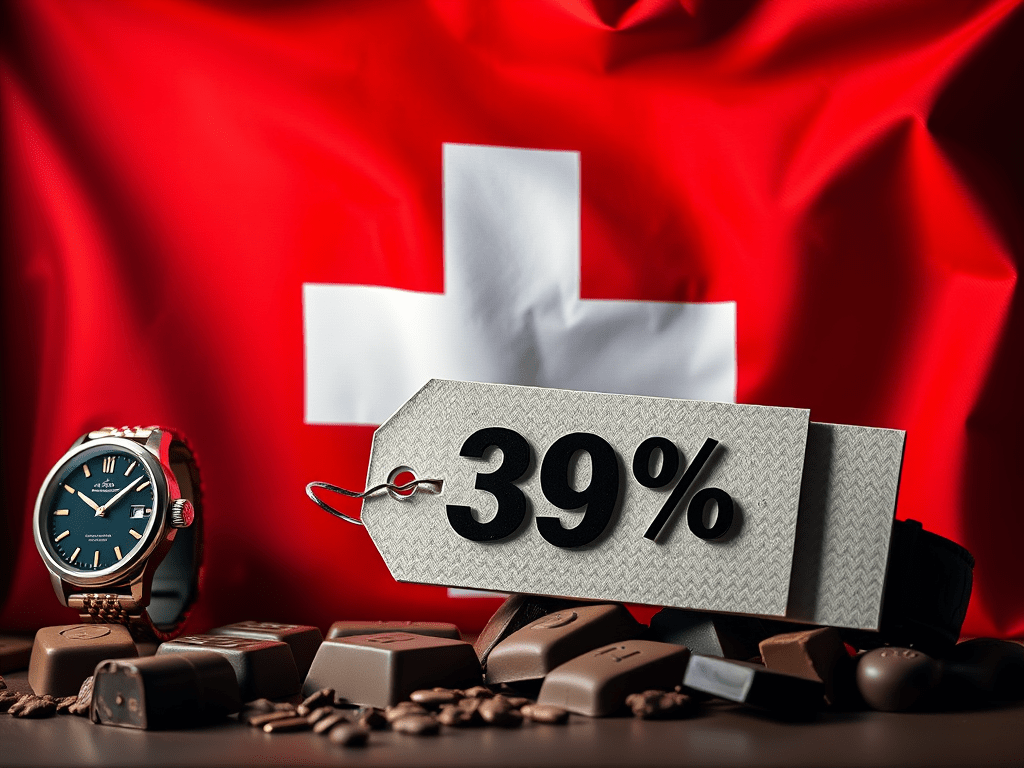
In August 2025, the U.S. unexpectedly imposed 39% tariffs on Swiss exports, a shock that reverberated across Switzerland’s economy—particularly impacting luxury goods, machinery, and export-dependent sectors (The Guardian, 2025). For risk practitioners, this event is a compelling case study: when geopolitical risk becomes immediate operational risk overnight.
This article explores what risk professionals should learn in three areas—and adds vital context on how Switzerland got here and what this new reality means for its enterprises.
Why Switzerland Found Itself Here
The tariffs hit at such a level — significantly higher than those imposed on the EU (15%) or the UK (10%) — that they surprised Swiss leaders, who believed a trade deal was imminent (Reuters, 2025). Switzerland’s vast export economy ($65 billion in 2024, a trade surplus of CHF 39 billion) hinges on U.S. access, making it unusually vulnerable (Wikipedia Switzerland–U.S. relations, 2025). Economiesuisse called the 39% tariff “unjustified” and a “very serious burden” on Swiss export companies (economiesuisse, 2025).
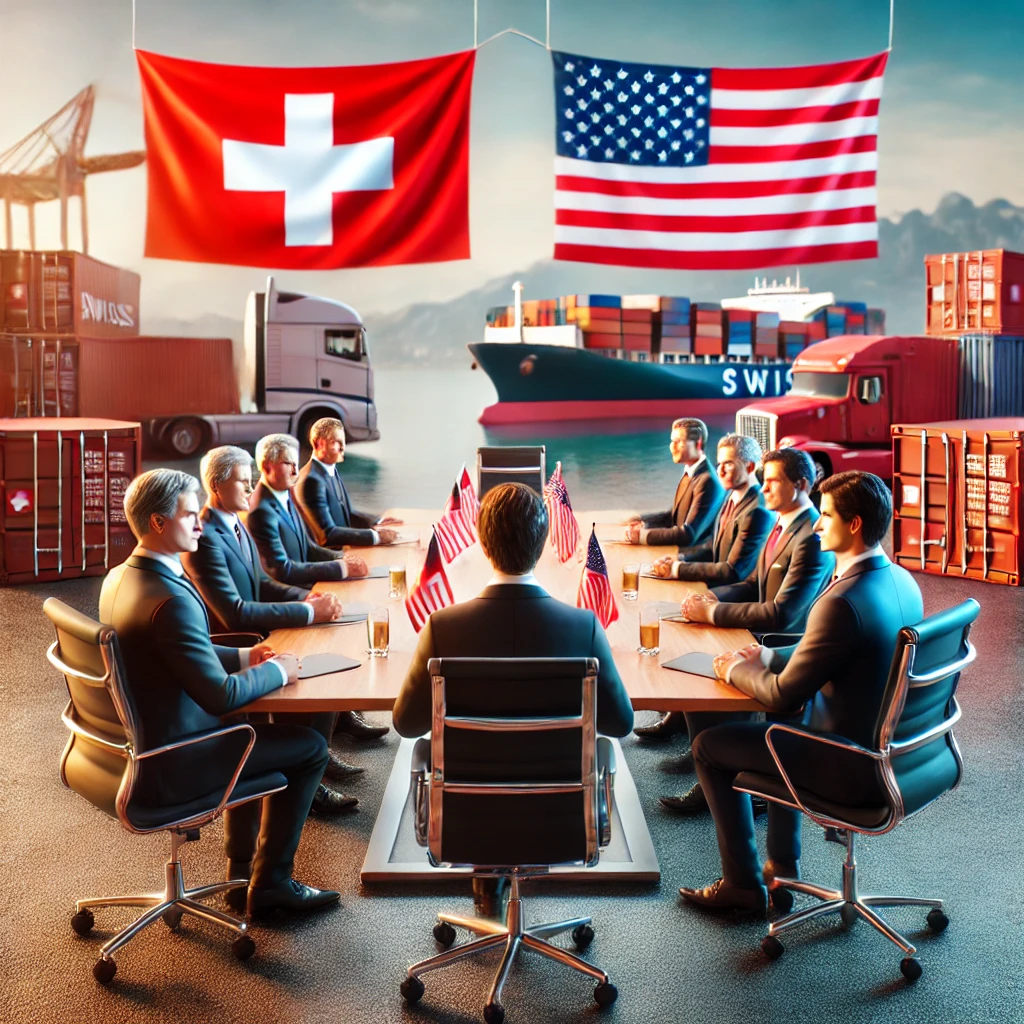
What This New Reality Means for Swiss Enterprises
Margin pressure: Products like Rolex or Lindt may reach unsustainable price levels; consumer elasticities could shift, especially for mid-tier goods (Vogue Business, 2025; CNBC, 2025).
SME existential threat: Small exporters risk getting priced out entirely. They lack offshore capacity or branding flexibility to shift manufacturing (iamexpat.ch, 2025; AP News, 2025).
Economic drag: KOF and Capital Economics estimate GDP contraction up to 0.6% (KOF ETH Zurich, 2025; CNBC, 2025).
Diplomacy pivot: Focus shifts toward pursuing a U.S.–Swiss trade agreement or re-aligning more closely with EU trade frameworks (Wikipedia Switzerland–U.S., 2025)
First Learning: Scenario Planning and Tail-Risk Stress Testing
The Swiss economy, especially its watch, chocolate, machinery, and agri-food sectors, was caught off guard—despite pre-shock warehouse stockpiling and initial preparations (SWI swissinfo.ch, 2025). CEOs across industries had flagged tariff uncertainty as a key concern (EY, 2025). The lesson: create scenarios for low-probability, high-impact geopolitical shocks—and have executable playbooks ready.
Risk professionals need to:
- Ensure board-level review of such „black swan“ scenarios is part of governance cadence.
- Conduct tail-risk stress tests inclusive of trade shocks.
Second Learning: Supply Chain Diversification as Resilience
Tariffs raised costs by nearly 50%, especially when combined with a strong Swiss franc, devastating margins—particularly for SMEs in chocolate, cheese, and watches (AP News, 2025; CNBC, 2025). Larger firms could pivot production to the U.S. or EU, but many SMEs lacked such flexibility (iamexpat.ch, 2025). Swissmem is urging its members to diversify into markets like India, Southeast Asia, and Latin America (RTS, 2025).
Risk takeaway:
- Model alternate production or routing scenarios, especially for SMEs.
- Develop a diversification dashboard tracking supplier and market exposure.

Third Learning: Strategic Governance and Rapid Stakeholder Coordination
Swiss leaders responded with emergency cabinet meetings, flying to negotiate, but failed to secure a reduction—from the expected 10% down to 39% (Reuters, 2025). Stock markets fell (~1.8%) as the shock hit consumer confidence (The Guardian, 2025).
Key lesson:
- Pre-approve rapid stakeholder engagement scripts—including government, regulator, and political outreach components.
- Embed escalation protocols tied to thresholds (e.g., >30% tariff).
Conclusion
The 39% tariff shock exemplifies how geopolitical decisions can morph into real operational and strategic crises. For risk practitioners: prepare rigorously, diversify strategically, and govern responsively.
At Bazzi Consulting, we help institutions turn such shocks into strategic strengths through scenario frameworks, supply chain resilience planning, and governance architectures ready for rapid escalation.
References
AP News (2025) “Switzerland… Could see prices skyrocket…”AP News
CNBC (2025) “‘Stunned’: Impact of tariffs”CNBC+1
economiesuisse (2025) “Severe and unjustified US tariffs…”economiesuisse
EY (2025) CEO outlook on tariffsLe News
Guardian (2025) “Swiss president under fire…”The Guardian
iamexpat.ch (2025) impact assessmentIamExpat in Switzerland
KOF ETH Zurich (2025) GDP estimateKOF Konjunkturforschungsstelle
SWI swissinfo.ch (2025) export strategiesSWI swissinfo.ch
Vogue Business (2025) watch industry resilienceFinancial Times
Reuters (2025) Switzerland pursues talksReutersWall Street Journal
Wikipedia (2025) US–Switzerland trade relationsWikipedia
 BAZZI CONSULTING
Hinterlasse einen Kommentar